Tuesday, October 10, 2023

Joe Cianciotto Why Do We Love Steven Spielberg?


Oscars.org
Joe Cianciotto on the Beloved Maestro Steven Spielberg

Joe Cianciotto is back to talk about one of his passions -- film. Today, he features an individual many consider one of the, if not the greatest Hollywood director of all time, the beloved genius Steven Spielberg.  

A maestro of filmmaking and perhaps one of the best all-around film directors in history, Spielberg has been behind countless classics. He has sat behind the camera in several films that have been critically acclaimed, broken box-office records, or both. From Jaws and E.T.: The Extraterrestrial to Jurassic Park and Schindler's List, Spielberg has created an undeniable body of work that's as good as any director's.

As a tribute to the man, Joe Cianciotto found it fitting to feature his choices for the greatest Steven Spielberg movies.

 Jaws (1978)

Jaws is Joe Cianciotto's favorite Spielberg movie and for a good reason. It wasn't only Spielberg's first big title. Jaws is also widely known as the first summer blockbuster in box office history. This horror-adventure creature feature stands tall and proud in the horror genre, even by today's standards.

Jurassic Park (1993)

Jurassic Park in 1993 changed how CGI was used in feature films. Spielberg's vision of dinosaurs in the modern age was simply captivating. By combining CGI with practical effects, Spielberg set the bar so high that until today, very few have surpassed it.

IMDb.com

Schindler's List (1993)

Many say Schindler's List is Spielberg's magnum opus. No other film has shown the Holocaust with this scope before. This was also the film wherein Spielberg showed he could direct even the most serious subjects.

Saving Private Ryan (1998)

Saving Private Ryan is an epic entry in an already-packed action-war genre. This is also Joe Cianciotto's favorite war movie of all time. In addition, it shows just how masterful Spielberg is in a large-scale set, as the film features arguably the greatest opening action sequence ever filmed.

Tuesday, September 12, 2023

Joe Cianciotto on Using Virtual Tours in Architecture


guiding-architects.net
Joe Cianciotto on Modern Architecture: Virtual Tour 360

Virtual tour content is important in the construction and real estate industries. But the virtual tour applications to architecture may be even more valuable, says Joe Cianciotto.

Virtual tours, used to view homes or construction in progress remotely, can now be adapted as early as the design phase. Virtual tours can help those involved in architectural design realize their vision more effectively than using only traditional resources.

Property walkthrough 

A 360 Virtual Tour is a visually immersive experience that allows people to "walk through" a space. It's a three-dimensional presentation of an architectural plan.

Getting a clear picture of a proposed space based on only flat images can be challenging. With 360 virtual tours, you can take clients to your newly modeled home so that they can experience it rather than look at sketches, Joe Cianciotto points out. A virtual 360 view of the living room will place them in the middle of the room and give them an idea of how the space will look as if they were standing there.

website-files.com

Detailed viewing

The at-home walking tour is a popular marketing tactic in real estate and a site monitoring tool in other commercial spaces. But there are many perks for architects as well, notes Joe Cianciotto.

Imagine the precision of detail and scale architects have poured into 2-dimensional construction drawings, blown out into spatially accurate virtual designs. Virtual tour software allows users to create these tools so clients can move through a floor plan for a complete experience.

360 architectural virtual tour

Clients will be able to see every room. When creating a virtual tour, you can add elements, such as audio background and links to other websites' social media, explains Joe Cianciotto.

Tuesday, August 8, 2023

Joe Cianciotto: The Worst Movie Sequels of All Time 

static.standard
The Worst Sequels, According to Joe Cianciotto

Joe Cianciotto says that for every good sequel, there's one that's terrible. This list chronicles bad titles, from the cash grabs to the outright offensive ones. Most of the movies on this list did not need sequels, to begin with, but studios made them, and now we're here.

Jaws: The Revenge (1987) 

If there's a movie that shouldn't have become a franchise, it was Jaws. Unfortunately, Jaws: The Revenge exists. It's about a family hunted by a great white shark for revenge. The reasons for that revenge are never made clear, and it is a plot point in the film that the shark will travel from the coast of Massachusetts to the Bahamas to kill its prey. That's a determined shark. Jaws: The Revenge is ludicrous; it does everything the original Jaws tried to avoid in telling its own shark-infested horror story, says Joe Cianciotto.

amazon.com 

Transformers: Age of Extinction (2014) 

Sometimes, a sequel can be so bad that it's enjoyable, and Transformers: Age of Extinction almost gets there. Unfortunately, this soft reboot features new boring characters and is too long to be fun.

The action in this sequel is impossible to follow, and Mark Wahlberg is cast as an inventor. The movie is also loaded with product placement. Joe Cianciotto notes that it made a lot of money, and was not the final nail in the franchise's coffin, even if it should have been.

Another sequel delayed too long to be relevant, Zoolander 2 is bad in all ways the original was able to avoid. Joe Cianciotto thinks that the idea of Ben Stiller and Owen Wilson playing egotistic models being forced to deal with their irrelevance was an interesting one. Still, every decision they made was just bad. The first Zoolander was a smart look at the fashion industry. Its sequel is just two men yelling at clouds for two hours.

Thursday, July 6, 2023

Joe Cianciotto: Amazing Modern Female Architects

news.virginia.edu
Joe Cianciotto: Iconic Women in Architecture Today

According Joe Cianciotto, women have made their mark in architecture. Today, he pays tribute to two icons of the industry -- Yvonne Farrell and Shelle McNamara.

Farrell and McNamara took the spotlight in the most prestigious award in architecture - the Pritzker Prize. In 2020, co-founders Yvonne Farrell and Shelley McNamara of Irish firm Grafton Architects became the laureates of what is dubbed architecture's equivalent of the Nobel Prize.  

By winning the Pritzker Prize 2020, Yvonne Farrell and Shelley McNamara became the fourth and fifth female architects to win the award. The jury saw them as pioneers in a field that is traditionally a male-dominated profession. Both women have also been hailed as beacons to other women as they forged their own exemplary and professional paths. Past female architects who won the Pritzker Prize include Zaha Hadid in 2004, Kazuyo Sejima in 2010, and Carme Pigem in 2017. 

Joe Cianciotto also notes that Yvonne Farrell (1951) and Shelley McNamara (1952), along with three others, founded Grafton Architects in Dublin in 1978. The firm was named after a street of their original office to focus on the significance of a place instead of individuals. Significant projects in their home country of Ireland include the North King Street Housing (Dublin, 2000); Urban Institute of Ireland, University College Dublin (Dublin, 2002); Solstice Arts Centre (Navan, 2007); and many others. 

e-architect.com

Grafton Architects also had projects abroad, such as the Universita Luigi Bocconi in Milan (Milan, Italy 2008), which took the World Building of the Year award at the 2008 inaugural World Architecture Festival in Barcelona, Spain. Since then, more international projects came in and were equally cited by the architectural community, like the University Campus UTEC Lima (Lima, Peru 2015) - awarded the RIBA International Prize 2016 by the Royal Institute of British Architects (RIBA). 

According to Joe Cianciotto, recently completed projects include Institut Mines Télécom (Paris, France 2019) and Université Toulouse 1 Capitole, School of Economics (Toulouse, France 2019).


Tuesday, June 6, 2023

Joe Cianciotto's Favorite Trilogies of All Time 


hearstapps.com
Joe Cianciotto Reveals His Most Iconic Trilogies

A trilogy can be made in different ways. In its purest sense, a trilogy is planned from the beginning as a three-part story. It starts with the first film, which introduces the characters, their world, and the overall plot. There are numerous plot complications and heavy drama in the second movie. Finally, the finale wraps up the entire story with an ending that reminds the audience of everything that came before. That said, there are also great trilogies where a solo flick was so good and successful that the filmmakers decided to add two more to continue and finish the tale. With that in mind, here are Joe Cianciotto's most iconic trilogies.

timeout.com

Perhaps the greatest example of one story divided into three parts, The Lord of the Rings is the best example of a "pure" trilogy, according to Joe Cianciotto. Many have tried to copy its formula, but nothing comes close to J.R.R. Tolkien's epic fantasy, retold on the big screen by Peter Jackson. There's no better way to do it: to plan, write and prep three movies in advance and then film them all at once. The result was a combination of excellent production design, costumes, cinematography, visual effects, music, acting, and more. The films have a level of consistency so perfect that no other saga comes close.

Joe Cianciotto says that there is no limit to the pop cultural touchstone that is the Star Wars trilogy. The first three films in the franchise are undoubtedly the most popular film trilogy of all time. Nobody even made trilogies before Star Wars came along. In 1977, no one could have predicted how Star Wars would change movies and pop culture forever. Can you picture a world without Yoda, Luke Skywalker, Darth Vader, Han Solo, or Princess Leia in it?

Tuesday, May 9, 2023

Joe Cianciotto: Why Movie Theaters Are Still Around


uschamberfoundation.org
Joe Cianciotto on the Eternal Appeal of Movie Theaters

Many establishments, including movie theaters, have started to operate fully after three years of uncertainty. While it still might be a valid reaction for some to stay away from cinemas and watch films at home instead, Joe Cianciotto says that this shouldn't be the case. Theaters will always be the best places to experience movies, and that's a fact. 

Today, Joe Cianciotto talks about three reasons people should still consider watching the films they've been waiting for in theaters. 

First, and this is a big deal -- there are almost zero spoilers.

Since films released in movie theaters generally come out the earliest, there is a low chance that people who watch in theaters will suffer through spoilers spewed by inconsiderate people online. Considering the many people who think they're important enough to post plot twists of highly anticipated films on social media, the only way to get around them is to watch in cinemas. Waiting for movies to be released online increases the risk of a film being spoiled. 

wsj.com

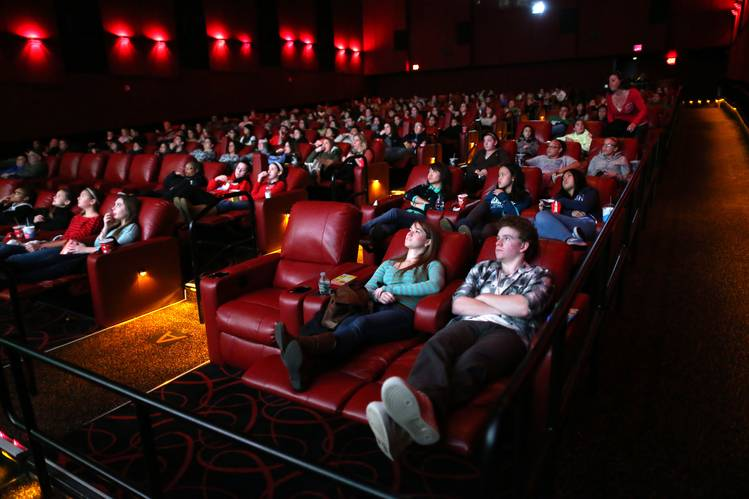
Next, there's an unmatched atmosphere when watching films in a movie theater.

According to Joe Cianciotto, while today's laptops and home theaters have excellent resolution, which is perhaps at par or maybe better than movie theater projectors, they still pale in comparison to cinemas when the ambiance is involved. For example, a horror film isn't as scary on a small screen, and a hard-hitting, edge-of-your-seat action movie isn't quite as thrilling as it would be on a giant screen.  

Finally, and this is a big deal -- you get to appreciate a film with strangers. True movie buffs would enjoy a viewing experience surrounded by fans, even if those fans are strangers. Seeing other people react to epic moments is fantastic, especially with films that bring along a massive fandom. Some movies bring people together. It's like watching a concert, and people are going wild.

Tuesday, April 4, 2023

Joe Cianciotto: The Greatest Oscar Best Picture Winners 


imdb.com
Joe Cianciotto's List of Oscar Best Picture Winners

One thing that Joe Cianciotto is passionate about is the cinema. Today, he shares his pick of the greatest Best Picture recipients of the Academy Award.
Forrest Gump
Forrest Gump tells the story of a simple, extraordinary man. The titular character, Forrest Gump, is shown to have been unknowingly present at many important events of the '60s and '70s in America. It is an excellent blend of comedy, romance, tragedy, and drama.
The Lord of the Rings: The Return of the King
According to Joe Cianciotto, bringing The Lord of the Rings trilogy to an epic conclusion wasn't an easy task, but The Return of the King was able to pull it off. As a result, it earns its place among the best of the 21st century's Best Picture winners. In many ways, it outdoes the other two films in the acclaimed trilogy.
The Godfather: Part II 

abcnews.com
Joe Cianciotto says that sequels winning Best Picture does not happen often. This makes The Godfather: Part II stand out. It builds on the first film brilliantly. It takes the new boss of the family, Michael Corleone, down a dark path. It also features flashbacks of how Vito Corleone established his crime family. The Godfather: Part II is considered one of the best sequels in film history.
Schindler's List

A haunting drama shot in black and white, Schindler's List is not an easy watch. It tells the story of Oskar Schindler, a greedy industrialist who used his resources to save more than 1000 Jewish lives during World War Two. It's an honest depiction of the atrocities of Nazi death camps that finds a shred of hope and humanity within a horrific historical period. It's a powerful and important film and arguably Steven Speilberg's best.

The Godfather (1972) 

As beloved as The Godfather: Part II is, it can't top the first film. There are a lot of great crime movies in the history of cinema, but it's The Godfather that redefined what the genre could do. It tells a crime-related story on a much larger scale than had been done before. As Joe Cianciotto notes, it's a near-perfect film that is beautiful, emotional, and gritty. It's one of the few Best Picture winners that deserves all the accolades.